
Article Sidebar
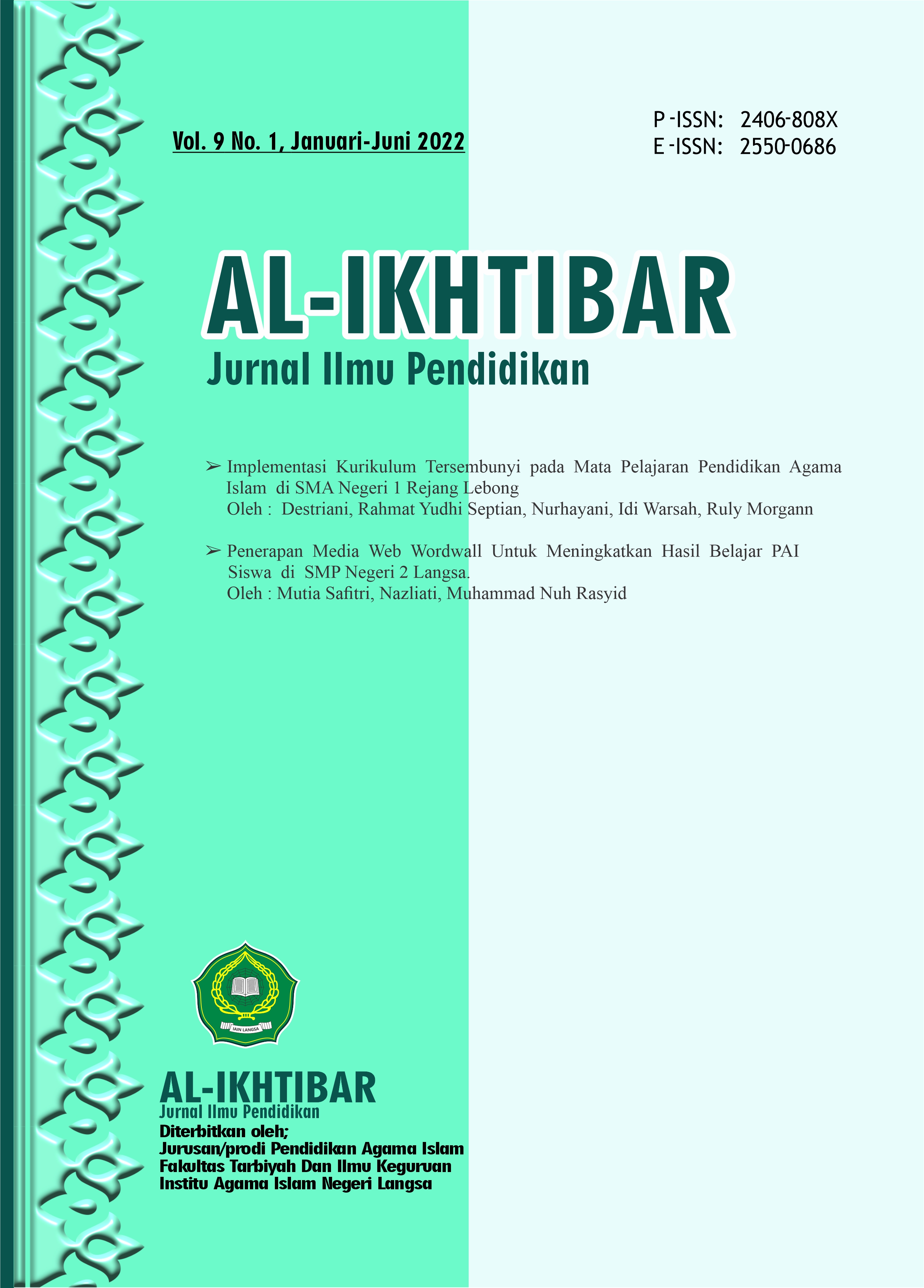
Downloads
Main Article Content
Abstract
The discourse on the hidden curriculum has not yet been scientifically touched upon in studies oriented towards curriculum in the Indonesian context. Therefore, this qualitative research seeks to address the discourse on the hidden curriculum. This study aimed to investigate the implementation of the hidden curriculum in the Islamic religious education subject at SMA Negeri 1 Rejang Lebong. Informants in the study were the Principal of SMAN 1 Rejang Lebong and Islamic Education Teachers. The data were garnered using in-depth interviews with the informants. The data were then analyzed using an interactive model. This study found that SMA Negeri 1 Rejang Lebong had implemented the hidden curriculum effectively. The implementation of the hidden curriculum included the integration of local culture with marriage-teaching materials and the use of references to the Kitab Kuning published by Middle Eastern countries as additions and reinforcements. The hidden curriculum was also implemented by inculcating the insight of religious moderation and Islamic understanding of Wasathiyah as a counter to the takfiri and intolerant thoughts that were circulated and widespread in cyberspace. This was done to fortify students' religious understanding so that it did not lead to a radical or liberal understanding.
Keywords
Article Details

This work is licensed under a Creative Commons Attribution-NonCommercial 4.0 International License.
References
- Akib, H. (2016). Implementasi Kebijakan. Jurnal Administrasi Publik, 1(8), 34–41.
- Amanudin, N. (2021). Penerapan Hidden Curriculum dalam Menjadikan Generasi Qurani di SDIT Al Istiqomah Puri Kosambi Karawang. Institut Ilmu Al Quran (IIQ) Jakarta.
- Angdreani, V., Warsah, I., & Karolina, A. (2020). Implementasi Metode Pembiasaan: Upaya Penanaman Nilai-Nilai Islami Siswa SDN 08 Rejang Lebong. At-Ta’lim : Media Informasi Pendidikan Islam, 19(1), 1–21. https://doi.org/10.29300/attalim.v19i1.3207
- Ary, D., Jacobs, L. C., Sorensen, C. K., Walker, D. A., & Razavieh, A. (2010). Introduction to research in education. In Measurement (8th ed., Vol. 4, Issue 43). Wadsworth, Cengage Learning. https://doi.org/10.1017/CBO9781107415324.004
- Asfiati. (2019). Internalisasi Pendekatan Humanis Dalam Kurikulum Tersembunyi. Darul Ilmi: Jurnal Ilmu Kependidikan Dan Keislaman, 7(01), 45–59. https://doi.org/10.24952/di.v7i01.1804
- Bahri, S. (2017). Pengembangan Kurikulum Dasar Dan Tujuannya. Jurnal Ilmiah Islam Futura, 11(1), 15. https://doi.org/10.22373/jiif.v11i1.61
- Banihashem, S. K., Farrokhnia, M., Badali, M., & Noroozi, O. (2021). The impacts of constructivist learning design and learning analytics on students’ engagement and self-regulation. Innovations in Education and Teaching International. https://doi.org/10.1080/14703297.2021.1890634
- Byrne, J. P. (2020). Perceiving the social unknown: How the hidden curriculum affects the learning of autistic students in higher education. Https://Doi.Org/10.1080/14703297.2020.1850320. https://doi.org/10.1080/14703297.2020.1850320
- Castell, E., Muir, S., Roberts, L. D., Allen, P., Rezae, M., & Krishna, A. (2021). Experienced qualitative researchers’ views on teaching students qualitative research design. Https://Doi.Org/10.1080/14780887.2021.1992061, 1–26. https://doi.org/10.1080/14780887.2021.1992061
- Caswita, C. (2019). Kurikulum Tersembunyi Dalam Pembelajaran Pendidikan Agama Islam. EDUKASI: Jurnal Penelitian Pendidikan Agama Dan Keagamaan, 17(3), 300–314. https://doi.org/10.32729/edukasi.v17i3.590
- Chandra, P. (2020). Problematika, Tantangan dan Peluang Pendidikan Agama Islam di Sekolah dan Perguruan Tinggi di Era Globalisasi. Jurnal Aghinya Stiesnu Bengkulu, 3(1), 124–136.
- Daheri, M., & Warsah, I. (2019). Pendidikan Akhlak: Relasi Antara Sekolah dengan Keluarga. At-Turats, 13(1), 3–20. https://doi.org/10.24260/at-turats.v13i1.1285
- Elisa. (2017). Pengertian, Peranan, Fungsi Kurikulum. Jurnal Ilmiah Fakutas KIP Universitas Quality, 1(2), 1.
- Fadilah, F. R., Warsah, I., & Wanto, D. (2020). Implementasi Outdoor Learning: Upaya Menanamkan Nilai-nilai Keislaman Siswa SDIT Cahaya Rabbani Kepahiang. Edugama: Jurnal Kependidikan Dan Sosial Keagamaan, 6(1), 38–55. https://doi.org/10.32923/edugama.v6i1.1253
- Faishol, R., Warsah, I., Mashuri, I., & Sari, N. (2021). Efektivitas Metode Muroja’ah Dalam Menghafal Al-Quran Pada Siswa Di Sekolah Arunsat Vittaya School Pattani Thailand. INCARE, International Journal of Educational Resources, 2(1), 066–100.
- Haryati, S., Sudarsono, A., & Suryana, E. (2015). Implementasi Data Mining Untuk Memprediksi Masa Studi Mahasiswa Menggunakan Algoritma C4.5 (Studi Kasus: Universitas Dehasen Bengkulu). Jurnal Media Infotama, 11(2), 130–138.
- Indrianto, N. (2020). Pendidikan Agama Islam Interdisipliner untuk Perguruan Tinggi. Deepublish.
- Inlay, L. T. (2016). Creating a culture of respect through the implicit curriculum. Http://Dx.Doi.Org/10.1080/00940771.2016.1102600, 47(2), 23–31. https://doi.org/10.1080/00940771.2016.1102600
- Mahmudi. (2019). Pendidikan Agama Islam Dan Pendidikan Islam Tinjauan Epistemologi, Isi, Dan Materi. TA’DIBUNA: Jurnal Pendidikan Agama Islam, 2(1), 89. https://doi.org/10.30659/jpai.2.1.89-105
- Masduki, Y., & Warsah, I. (2020). Psikologi Agama. Tunas Gemilang Press.
- Miles, M. B., Huberman, A. M., & Saldana, J. (2014). Qualitative data analysis: A methods sourcebook. SAGE Publications, Inc.
- Mousa, M. (2021). The Hidden Curriculum In Business Schools: Does It Initiate The Implementation Of Responsible Management Education In Fragile States? A Conceptual Analytical Study. Https://Doi.Org/10.1080/08832323.2021.1973944. https://doi.org/10.1080/08832323.2021.1973944
- Muhammedi. (2016). Perubahan kurikulum di indonesia: Studi kritis tentang upaya menemukan kurikulum pendidikan islam yang ideal. Raudhah, 4(1), 49–70.
- Mustaghfiroh, H. (2014). Hidden Curriculum Dalam Pembelajaran PAI. Edukasia : Jurnal Penelitian Pendidikan Islam, 9(1), 147–162. https://doi.org/10.21043/edukasia.v9i1.769
- Nasution, B. (2018). Kurikulum (Manhaj) Dalam Perspektif Pendidikan Islam (Sebuah Kajian Tentang Written Kurikulum Dan Hidden Kurikulum). Jurnal Al-Mutharahah, 15(2), 1–25.
- Priatmogo, S. (2018). Memperkuat Eksistensi Pendidikan Islam di Era 4.0. Jurnal Studi Pendidikan Islam, 1(2), 221–239.
- Puspitasari, W., Hamengkubuwono, Mutia, & Warsah, I. (2020). Implementasi penilaian autentik kurikulum 2013 pada mata pelajaran pendidikan agama Islam dan budi pekerti. At-Ta’lim: Media Informasi Pendidikan Islam, 19(1), 66–90. https://doi.org/10.29300/atmipi.v19.i1.3338
- Rohmad. (2021). Implementasi Hidden Curriculum Pesantren untuk Mengembangkan Karakter Religius Siswa di SMK Sunan Kalijaga Sampung Ponorogo. Institut Agama Islam Negeri Ponorogo.
- Rozi, F., Nuzuar, Kusen, & Warsah, I. (2020). Sinergitas peran komite dan kepala madrasah dalam meningkat mutu pendidikan di MAN 1 Lebong, Bengkulu. Al-IdarahL Jurnal Manajemen Pendidikan Islam, 5(2), 59–66.
- Sanjaya, W. (2013). Penelitian Pendidikan: Jenis, Metode dan Prosedur. Kencana Prenada Media Group.
- Suswandari, M., Suswandari, M., Siswandari, S., Sunardi, S., & Gunarhadi, G. (2020). Social Skills for Primary School Students: Needs Analysis to Implement the... Journal of Social Studies Education Research, 11(1), 153–162.
- Tuna, M. H. (2021). The professionalisation of Islamic religious education teachers. Https://Doi.Org/10.1080/01416200.2021.1999905. https://doi.org/10.1080/01416200.2021.1999905
- Uyun, M., & Warsah, I. (2021). Psikologi Pendidikan. Deepublish.
- Wai-Yan Wan, S., & Leung, S. (2021). Integrating phenomenography with discourse analysis to study Hong Kong prospective teachers’ conceptions of curriculum leadership. Https://Doi.Org/10.1080/0305764X.2021.1946484. https://doi.org/10.1080/0305764X.2021.1946484
- Warsah, I. (2017). Kesadaran Multikultural sebagai Ranah Kurikulum Pendidikan. Ta’dib: Jurnal Pendidikan Islam, 6(2), 29–38. https://doi.org/10.29313/tjpi.v6i2.2845
- Warsah, I. (2020a). Learning problems of Islamic education at SMA LB of Rejang Lebong. Ta’dib: Jurnal Pendidikan Islam, 9(1), 164–174.
- Warsah, I. (2020b). Religious Educators: A Psychological Study of Qur’anic Verses Regarding al-Rahmah. AL QUDS : Jurnal Studi Alquran Dan Hadis, 4(2), 275–298. https://doi.org/10.29240/alquds.v4i2.1762
- Warsah, I. (2021). Islamic Religious Teachers’ Efforts to Motivate Students and Implement Effective Online Learning. Edukasi Islami: Jurnal Pendidikan Islam, 10(01), 383. https://doi.org/10.30868/ei.v10i01.1210
- Warsah, I., Imron, Siswanto, & Sendi, O. A. M. (2020). Strategi Implementatif KKNI Pendidikan Islam di IAIN Curup dalam Pembelajaran. Jurnal Tarbiyatuna, 11(1), 77–90.
- Warsah, I., & Nuzuar, N. (2018). Analisis Inovasi Administrasi Guru dalam Meningkatkan Mutu Pembelajaran (Studi MAN Rejang Lebong). EDUKASI: Jurnal Penelitian Pendidikan Agama Dan Keagamaan, 16(3), 263–274. https://doi.org/10.32729/edukasi.v16i3.488
- Warsah, I., & Uyun, M. (2019). Kepribadian Pendidik: Telaah Psikologi Islami. Psikis : Jurnal Psikologi Islami, 5(1), 62–73. https://doi.org/10.19109/psikis.v5i1.3157
- Yao, J. X., & Guo, Y. Y. (2018). Core competences and scientific literacy: The recent reform of the school science curriculum in China. Https://Doi.Org/10.1080/09500693.2018.1514544, 40(15), 1913–1933. https://doi.org/10.1080/09500693.2018.1514544